
EPDM Flat Roof, Welsh Slate Roof & Chimney Repairs in Tiddington
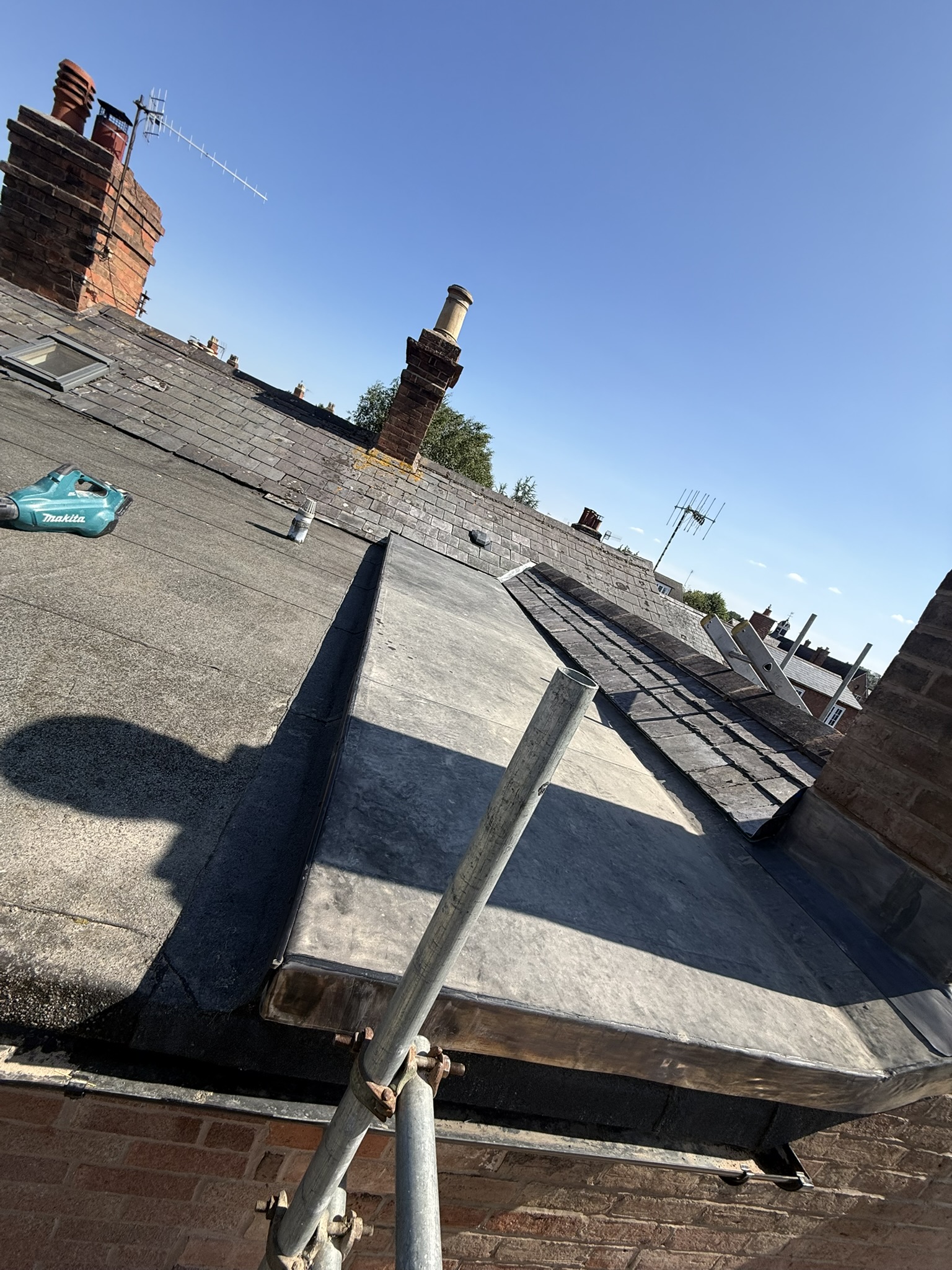
At this property on Carters Lane in Tiddington, Stratford-upon-Avon, Roof Maintenance Leamington carried out a coordinated programme of roofing work covering the flat roof, the adjoining pitched slate roof and the chimney.
Location
Carters Lane, Tiddington, Stratford-upon-Avon
Duration
To be confirmed
Problem Solved
An ageing felt flat roof, worn pitched slate roof and deteriorating chimney details were renewed as one coordinated roofing project, improving waterproofing, insulation and long-term roof protection.
Older properties often need more than one roofing problem addressed at the same time. At this property on Carters Lane in Tiddington, Stratford-upon-Avon, the flat roof, adjoining pitched slate roof and chimney were all part of the same coordinated programme of work.
The existing felt flat roof was replaced with a new insulated EPDM warm roof system, while the pitched roof above was renewed using reclaimed Welsh slates. The chimney was also repointed and re-flaunched, with the surrounding leadwork renewed using new Code 4 lead flashings.
By tackling the different roof areas together, the team could address several potential routes for water ingress while preserving the traditional appearance of the property.
The Roofing Challenge
This property had several different roof elements meeting within a relatively compact area. There was an existing felt flat roof, a traditional pitched roof finished in slate and a chimney passing through the surrounding roof structure.
Each element has its own job, but they cannot be considered completely independently. Water moving across a pitched roof eventually reaches junctions, flashings, gutters and lower roof areas. Likewise, a chimney passes directly through the roof covering and therefore requires effective weatherproofing around its base.
A defect in any one of these details can lead to water finding a route into the building. The project at Carters Lane therefore involved more than simply replacing one worn roof covering.
Replacing the Existing Felt Flat Roof
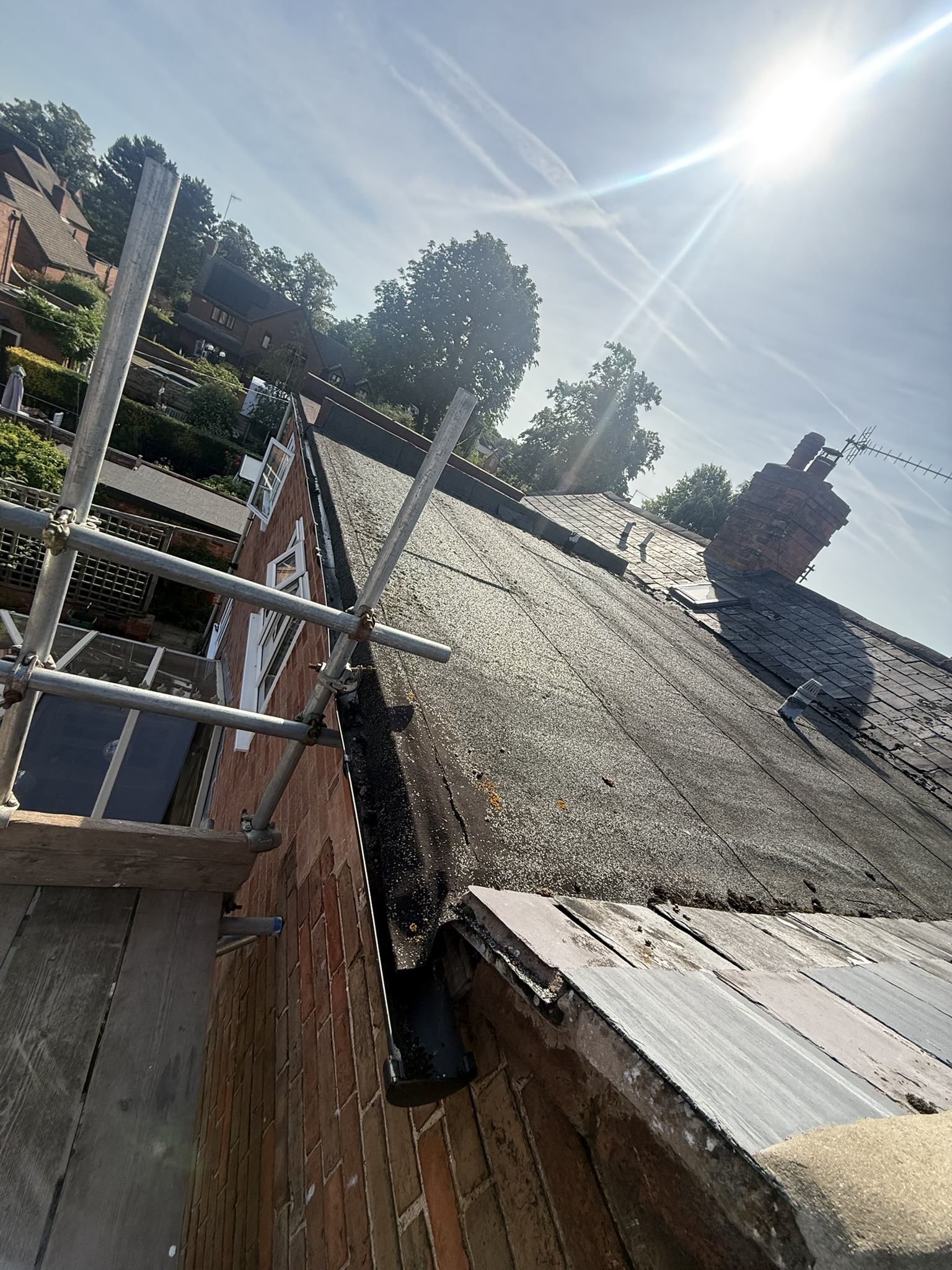
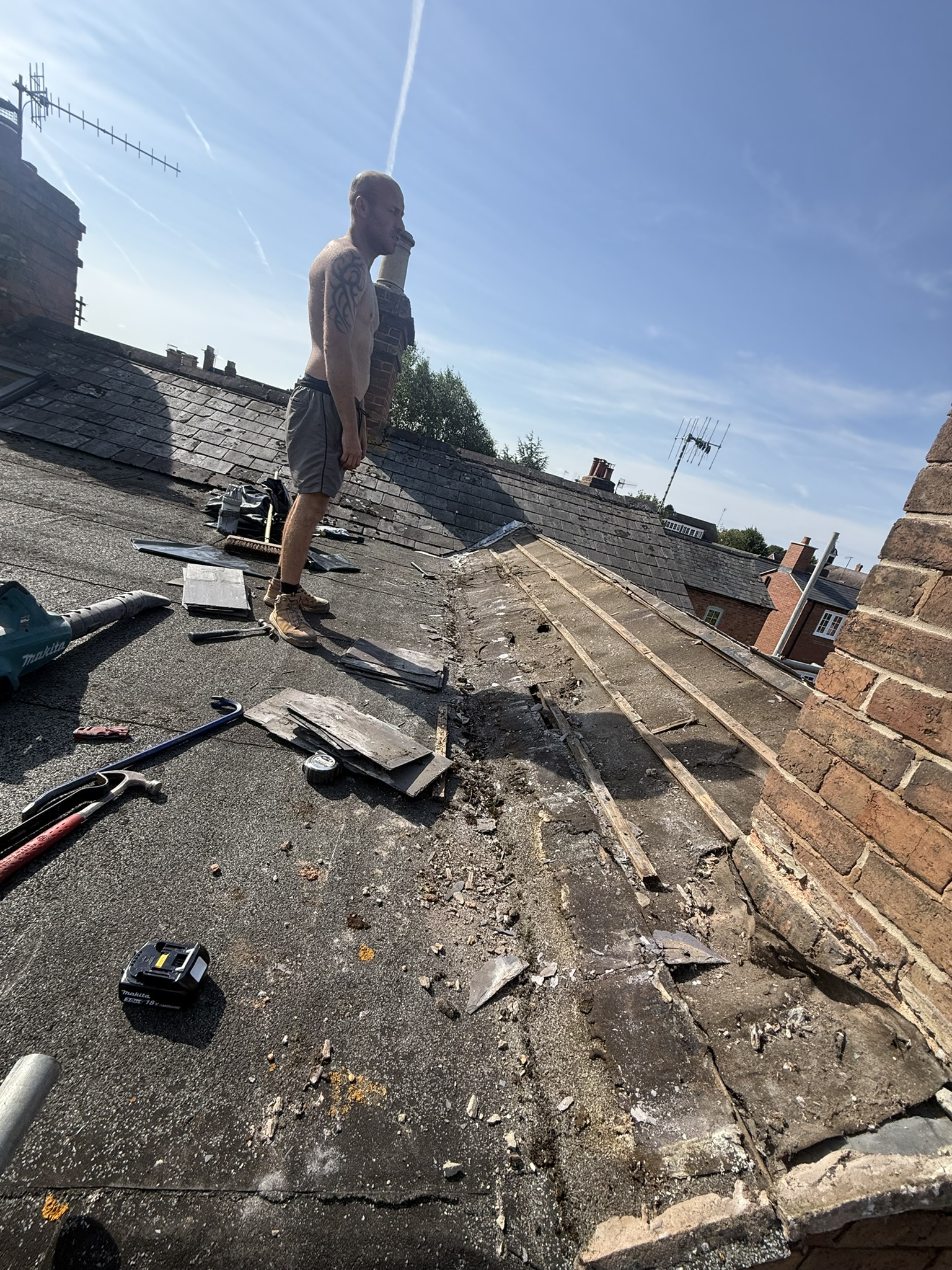
The existing felt flat roof had reached the stage where replacement was required. Older felt roofs can deteriorate as they are exposed to sunlight, temperature changes, standing moisture and general weathering over many years.
Once a roof covering begins to fail across a larger area, repeated patch repairs may offer only temporary relief. At Carters Lane, the existing roof was renewed rather than continually trying to extend the life of an ageing felt system.
Installing an Insulated EPDM Warm Deck Roof
The new flat roof was constructed as an insulated warm deck roof and finished with an EPDM waterproofing system. A warm roof places insulation above the main structural roof deck rather than beneath it.
This keeps more of the roof structure on the warmer side of the insulation layer and is a commonly used construction method when improving the thermal performance of a flat roof.
For the homeowner, this meant the project was not simply replacing one waterproof layer with another. The new roof also incorporated insulation as part of the roof build-up.
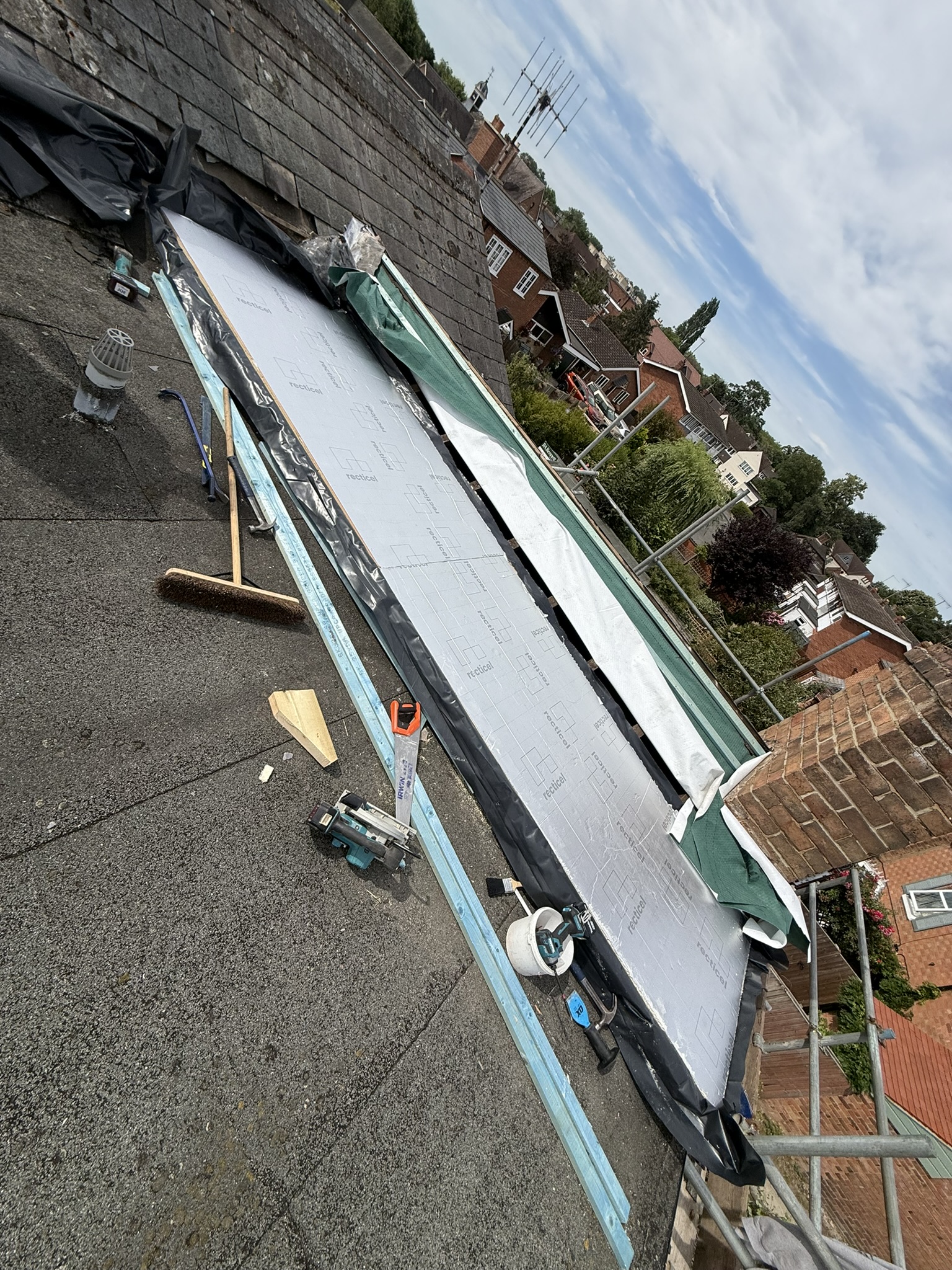
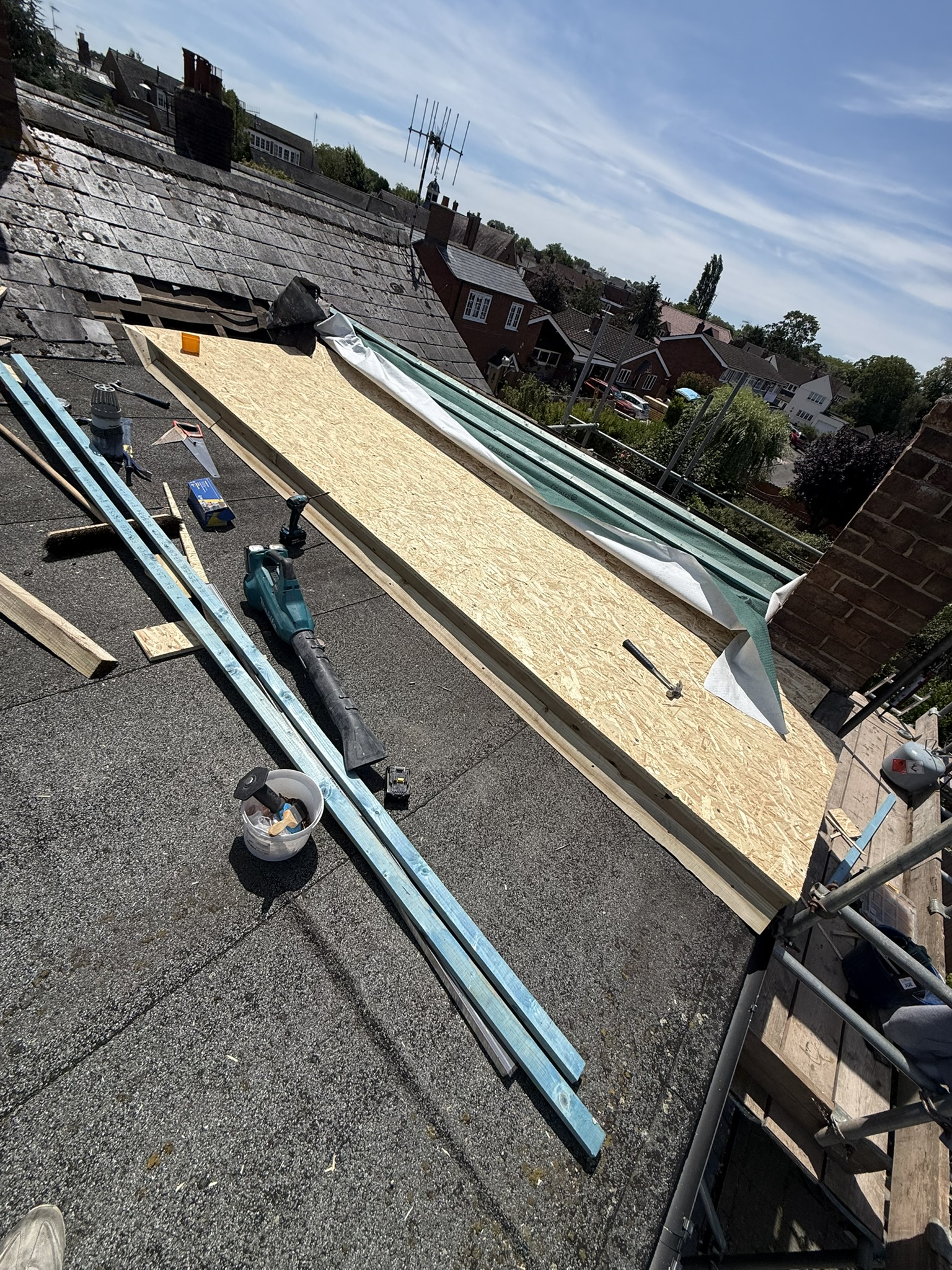
The installation photographs show the existing roof being opened up, the new roof build-up being formed and new boards being installed before the final waterproof covering was completed.
Why EPDM Was Used
EPDM is a synthetic rubber roofing membrane commonly used on flat and low-pitched roofs. When correctly installed, it creates a durable waterproof layer across the roof surface and can be particularly useful where a relatively uninterrupted flat roof needs to be protected.
Flat roofs behave differently from pitched roofs. Rainwater naturally leaves a steeply pitched roof quickly, while water travels more slowly across a flat roof. This makes the quality of the waterproof covering and perimeter detailing particularly important.
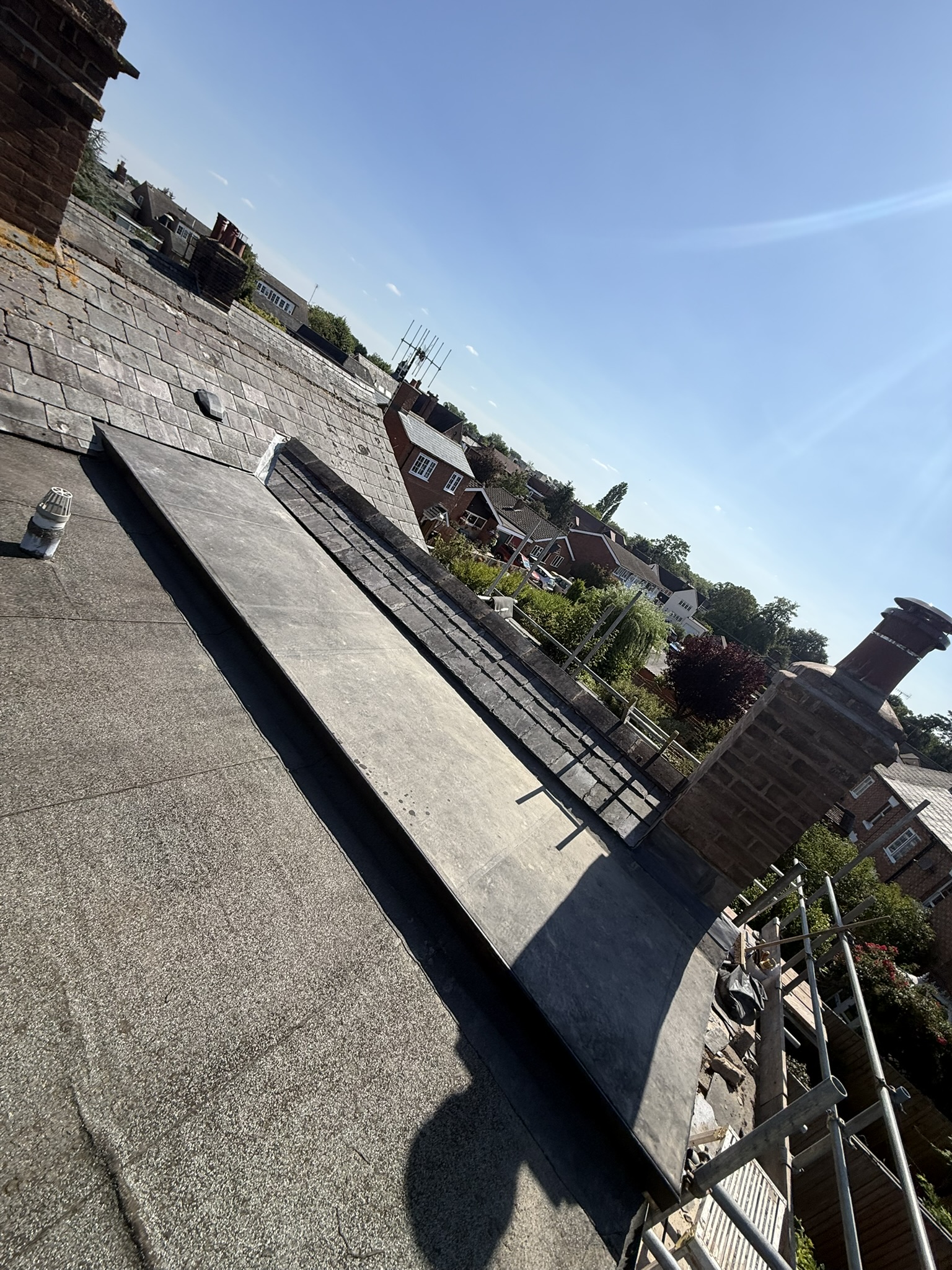
The completed roof at Carters Lane now has a continuous EPDM weatherproofing layer protecting the newly insulated roof below.
Renewing the Pitched Roof With Reclaimed Welsh Slates
Above the flat roof sat a traditional pitched slate roof. Rather than replacing the existing roof with a completely different modern material, the pitched roof was renewed using reclaimed Welsh slates.
This was an important choice for the appearance of the property. Older roofing materials develop distinctive colour variations, texture and weathering over time. Installing a very uniform modern replacement can sometimes create a section of roof that visually jars against the rest of an older building.
Using reclaimed Welsh slate helps retain a more authentic appearance while still allowing the roof covering itself to be renewed.
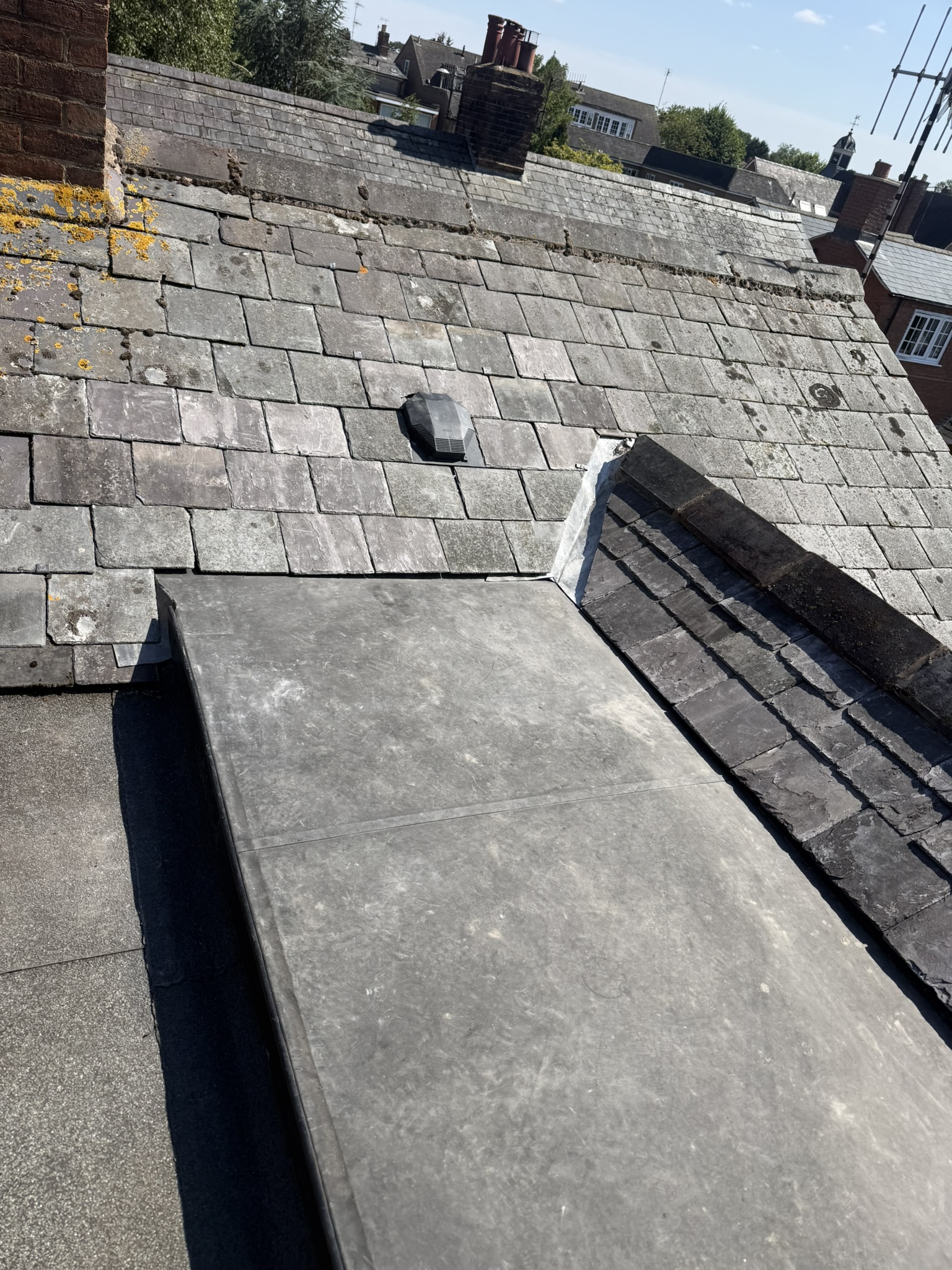
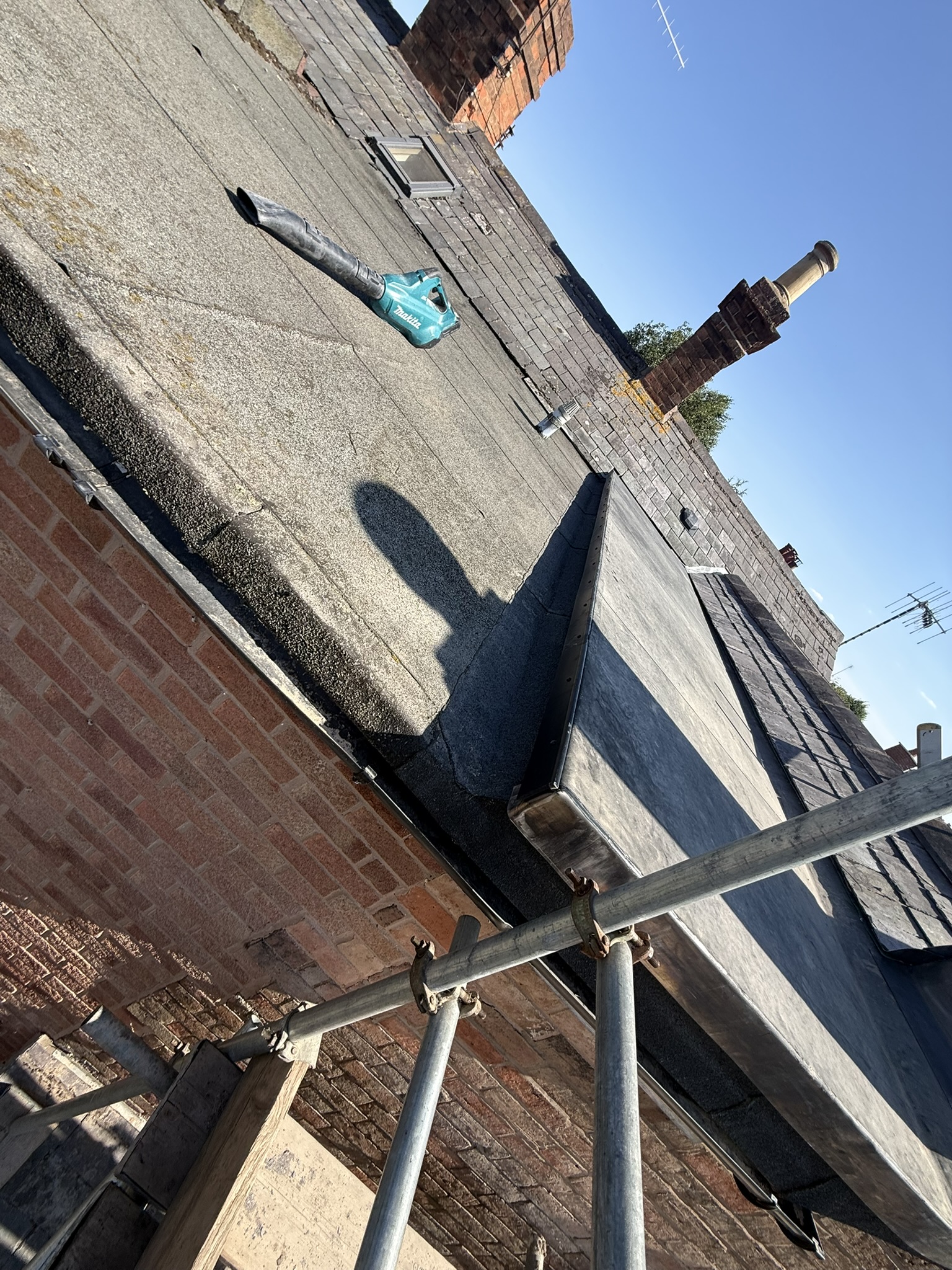
The finished photographs show the traditional slate roof sitting naturally alongside the newly completed flat roof.
Why Welsh Slate Is Common on Older Properties
Natural Welsh slate has been used on British roofs for generations. Its thin profile, natural variation and durability made it a common roofing material on many historic and traditional properties.
When an older slate roof requires significant repair, suitable reclaimed slate can sometimes be used to preserve the appearance of the building. This is especially useful where only part of a larger roof is being renewed and the new work needs to sit sympathetically alongside surrounding older roofing.
Repointing the Chimney
The roofing work also included repointing the chimney. Mortar joints between chimney bricks are continually exposed to rain, frost and wind. As mortar begins to deteriorate, gaps can develop between the bricks. This allows more moisture to enter the masonry and can accelerate further deterioration.
Repointing removes defective mortar and replaces it with new material, helping restore the weather resistance and stability of the brickwork. Because chimneys are positioned at one of the most exposed points of a property, maintaining these mortar joints is an important part of looking after the wider roof.
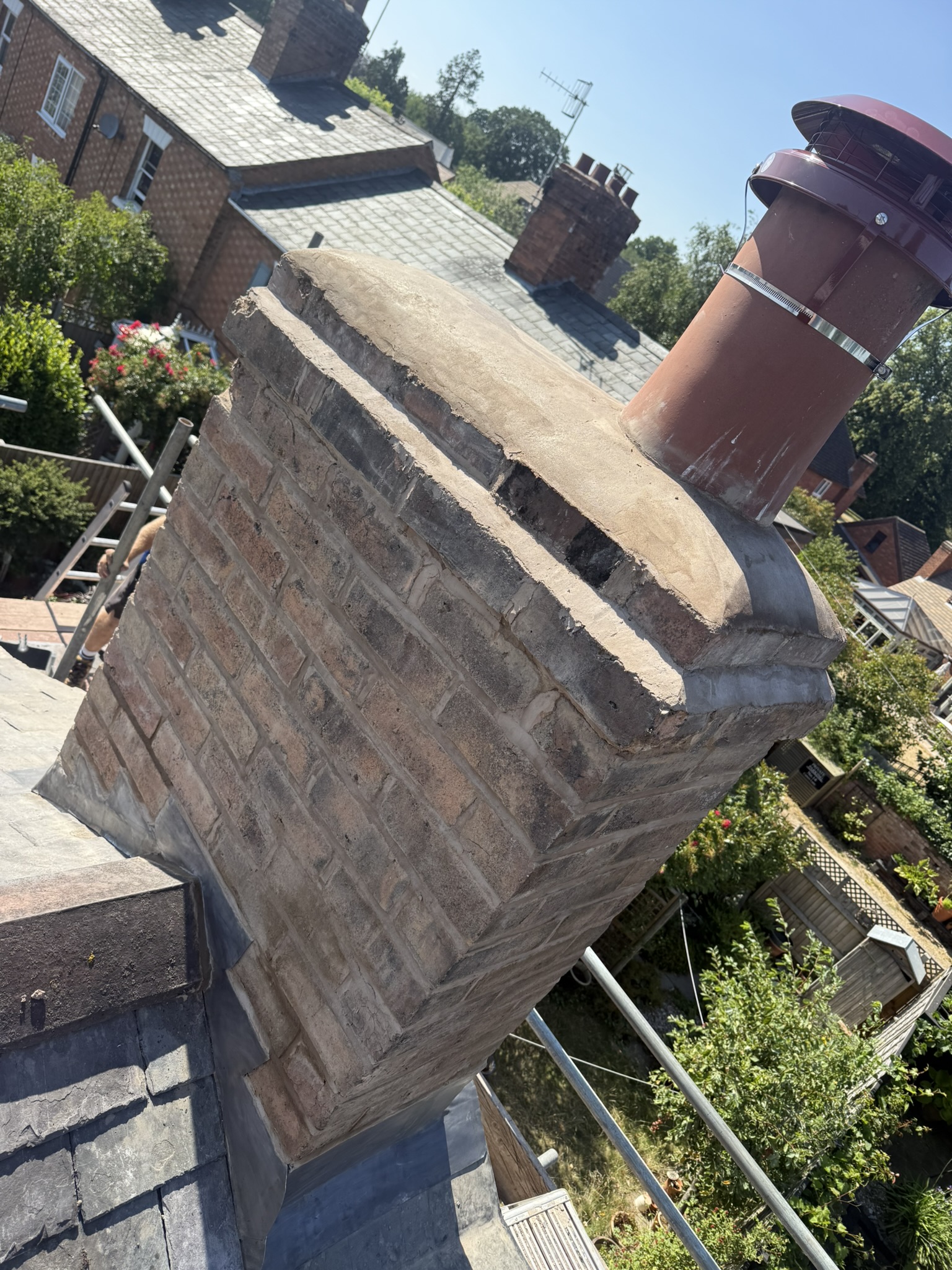
Re-Flaunching the Chimney
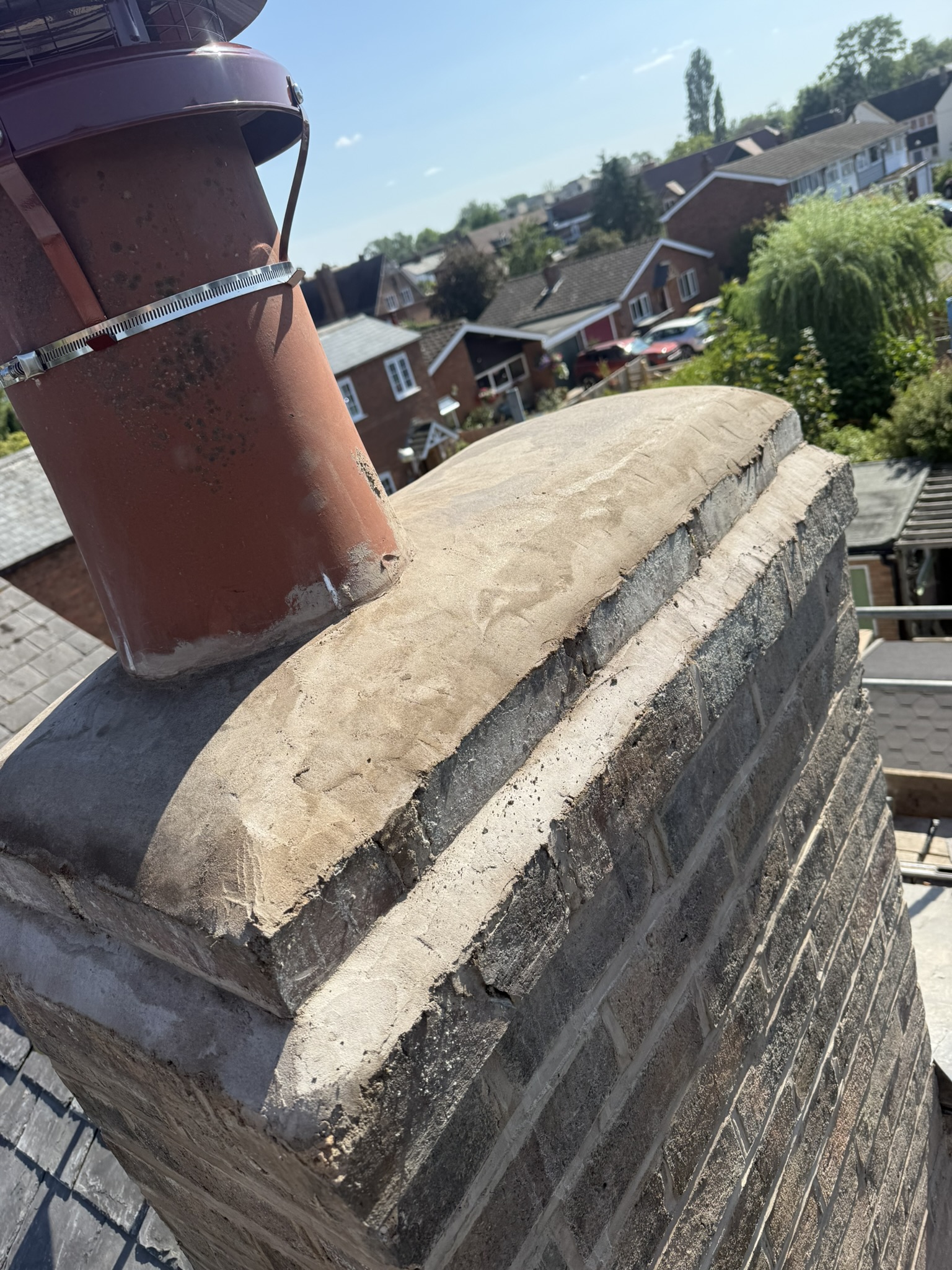
The chimney was also re-flaunched. Flaunching is the mortar finish formed at the top of a chimney around the base of the chimney pot.
Its job is to secure the pot while creating a sloped surface that encourages rainwater to drain away rather than sit on top of the chimney stack. Over time, chimney flaunching can crack or deteriorate.
Once this happens, moisture can penetrate into the top of the chimney and contribute to damage lower down. Renewing the flaunching created a fresh weather-resistant finish around the chimney pot.
Renewing the Chimney Leadwork
Another important part of the project was the renewal of the lead flashing around the chimney using Code 4 lead. Where a chimney passes through a pitched roof, the junction between the masonry and roof covering has to be carefully sealed.
Lead flashing forms a weatherproof transition between these two surfaces. Without effective flashing, rainwater running down the chimney or roof can find its way behind the tiles or slates.
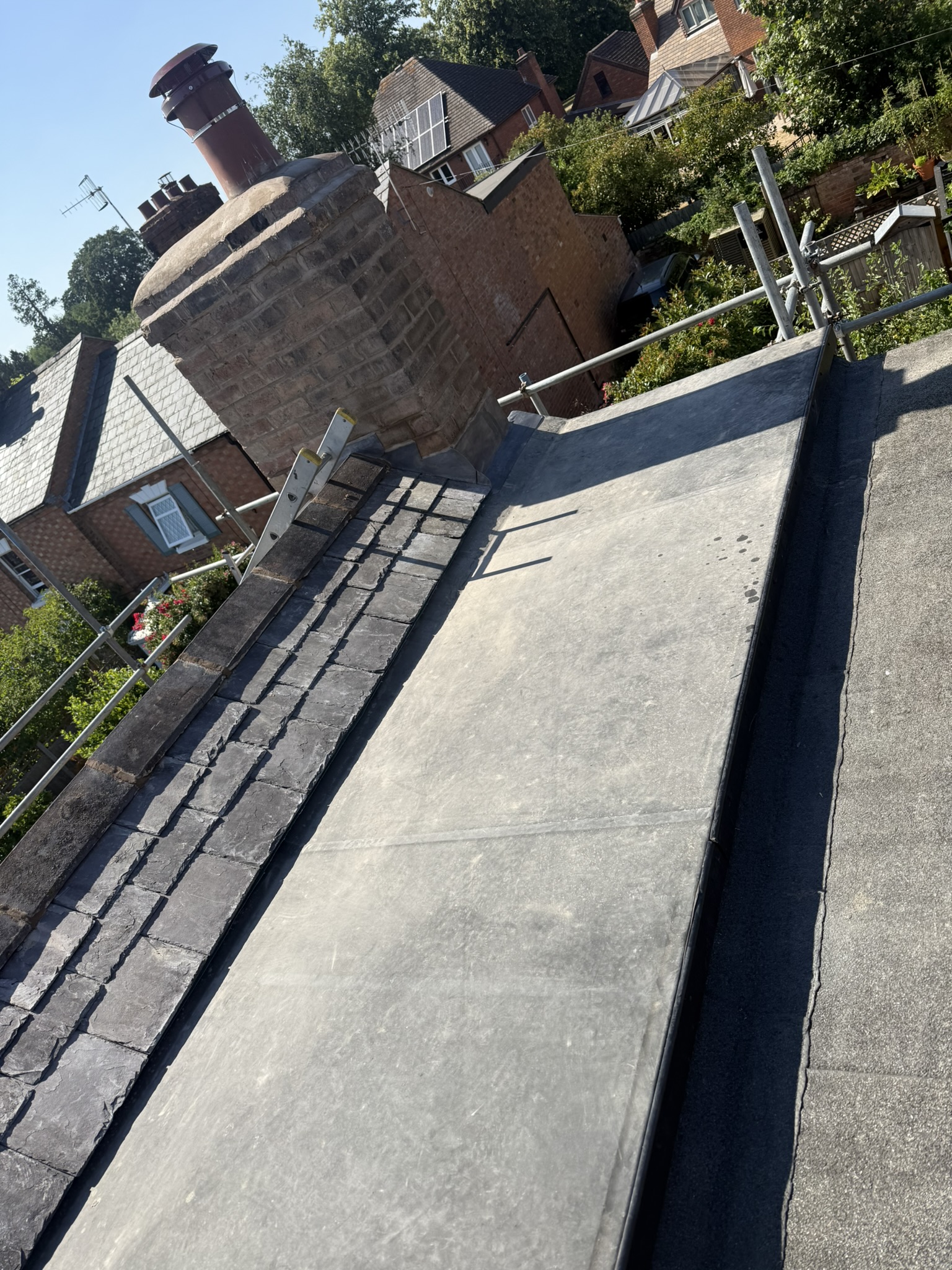
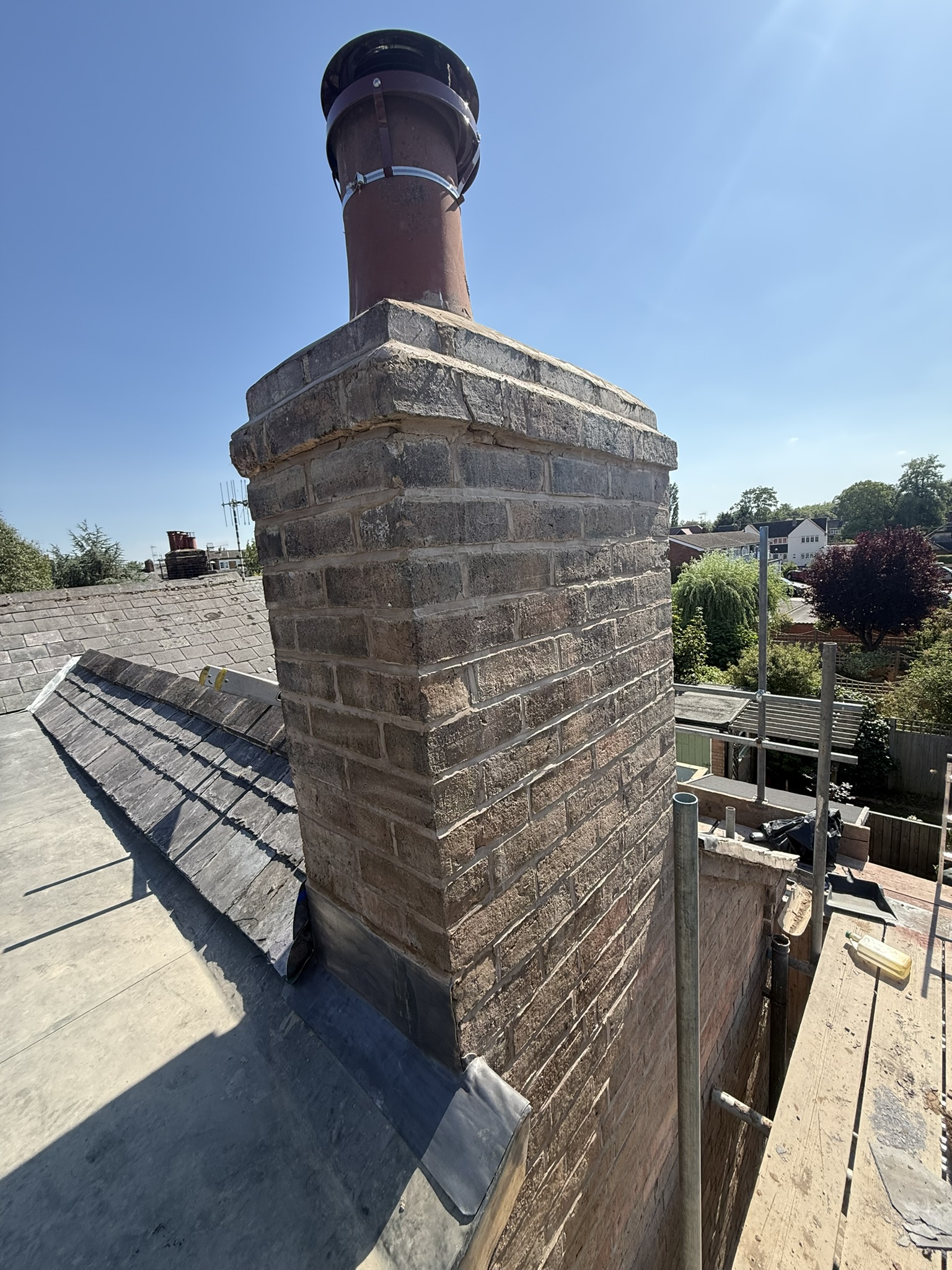
The new leadwork at Carters Lane was formed around the base of the chimney, creating a clear weatherproof junction with the surrounding roof. This is one of those roofing details that can look relatively small from ground level but is enormously important to the performance of the roof.
Why Chimney Flashing Causes Roof Leaks
When homeowners notice damp around a chimney breast, they often assume the chimney itself is leaking. Sometimes that is the case, but water can also enter through:
- failed lead flashing
- cracked mortar joints
- deteriorated flaunching
- damaged slates around the chimney
- poorly formed roof junctions
Because these components sit so close together, correctly identifying the actual cause of a chimney-related leak is important before carrying out repairs. This project addressed several of those potential weak points at the same time.
Combining Traditional Materials With Modern Roofing
One of the most interesting aspects of this Tiddington project is the combination of roofing materials. The property now incorporates a modern insulated EPDM warm roof alongside traditional reclaimed Welsh slate, brick chimney construction and lead flashing.
Those materials perform very different jobs. There is no requirement for every roof on an older property to use the same technology. The better approach is often to use the most appropriate system for each section while making sure the different roof elements connect correctly.
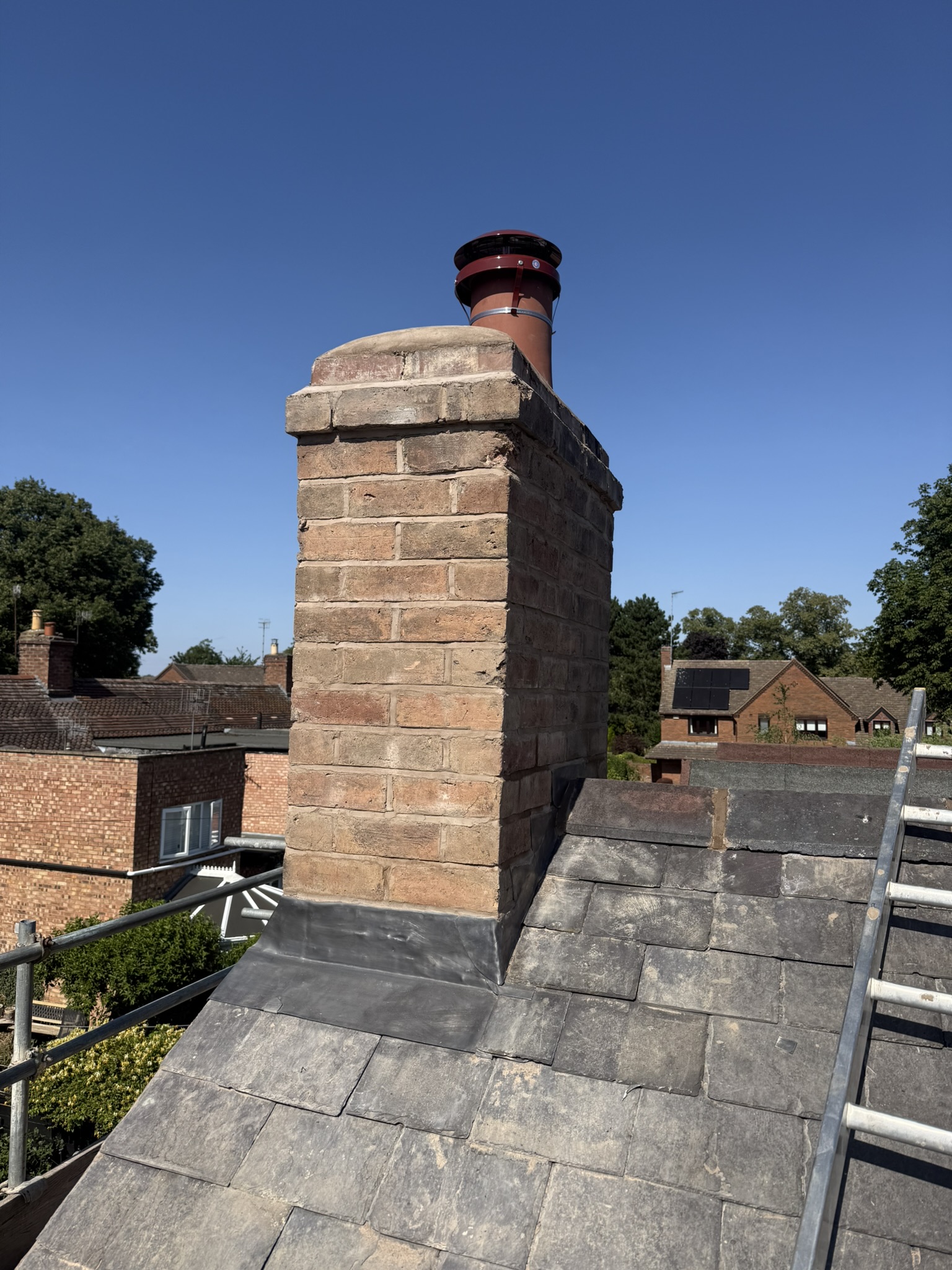
At Carters Lane, that meant modernising the flat roof while maintaining the traditional character of the pitched roof above.
Should You Insulate a Flat Roof When Replacing It?
If an older flat roof is already being stripped and renewed, it can be a good opportunity to review its insulation. Modern roof construction places much greater emphasis on thermal performance than many older roofs did.
An insulated warm roof can help reduce heat loss through the roof while also creating a roof build-up designed around modern construction principles.
The exact specification will depend on the building, existing construction and requirements of the project, but insulation should be considered whenever a flat roof is being comprehensively replaced.
Roof Repairs in Tiddington and Stratford-upon-Avon
Roof Maintenance Leamington carries out flat roof replacement, EPDM roofing, slate roofing, chimney repairs, chimney repointing, re-flaunching and leadwork throughout Tiddington, Stratford-upon-Avon and the surrounding Warwickshire area.
The Carters Lane project demonstrates why roofing is often about more than the main visible roof covering. Flat roof membranes, slate, chimney masonry, flaunching and leadwork all form part of the same weatherproof envelope.
If one weak point fails, water only needs one route inside. Addressing the complete roof system gives the property a much stronger defence against the weather.
Need similar results for your property?
Our experienced team is ready to assess your roofing or chimney issue and provide a detailed, honest quote.