
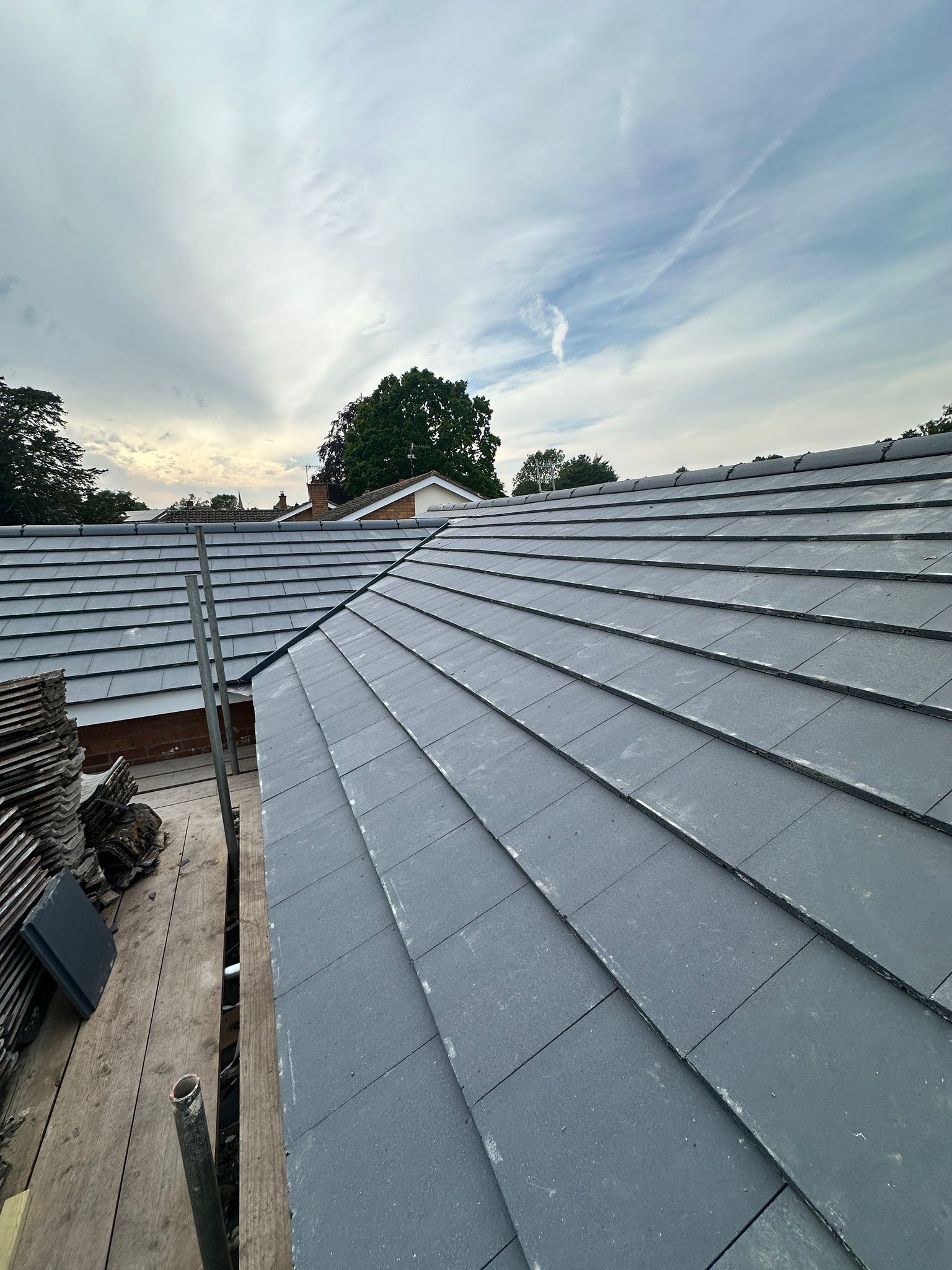
Full Reroof and New Extension Roof in Leamington Spa
At a Fernhill Drive home in Leamington Spa, we completed a new front extension roof alongside a full reroof of the existing property.
Location
Fernhill Drive, Leamington Spa
Duration
To be confirmed
Problem Solved
A new front extension needed to be roofed while the existing roof was also due for replacement. The project created one consistent tiled roof across the property while improving the roof's valleys, ridge system and ventilation.
When a property is being extended, it can be the perfect opportunity to look at the condition of the existing roof at the same time.
At this home on Fernhill Drive in Leamington Spa, Roof Maintenance Leamington completed the roof to a new front extension while also reroofing the existing sections of the property.
The project combined Sandtoft roof tiles, a dry valley system, dry ridge, over-fascia ventilation and traditional cement verges, creating a roof that blends modern roofing methods with a finish that suits the character of the home.
The Roofing Project
The work at Fernhill Drive involved two connected parts. The property had been extended at the front, creating a completely new section of roof that needed to be installed. At the same time, the existing roof covering on the rest of the house was replaced.
Instead of treating the extension and original property as completely separate roofing jobs, the work was completed as one coordinated project. This allowed the new and existing roof areas to be brought together visually while also giving the homeowners the opportunity to improve some of the most important technical details of the roof.
The finished result is a consistent pitched roof covering across the property, with the different roof slopes and junctions neatly integrated.
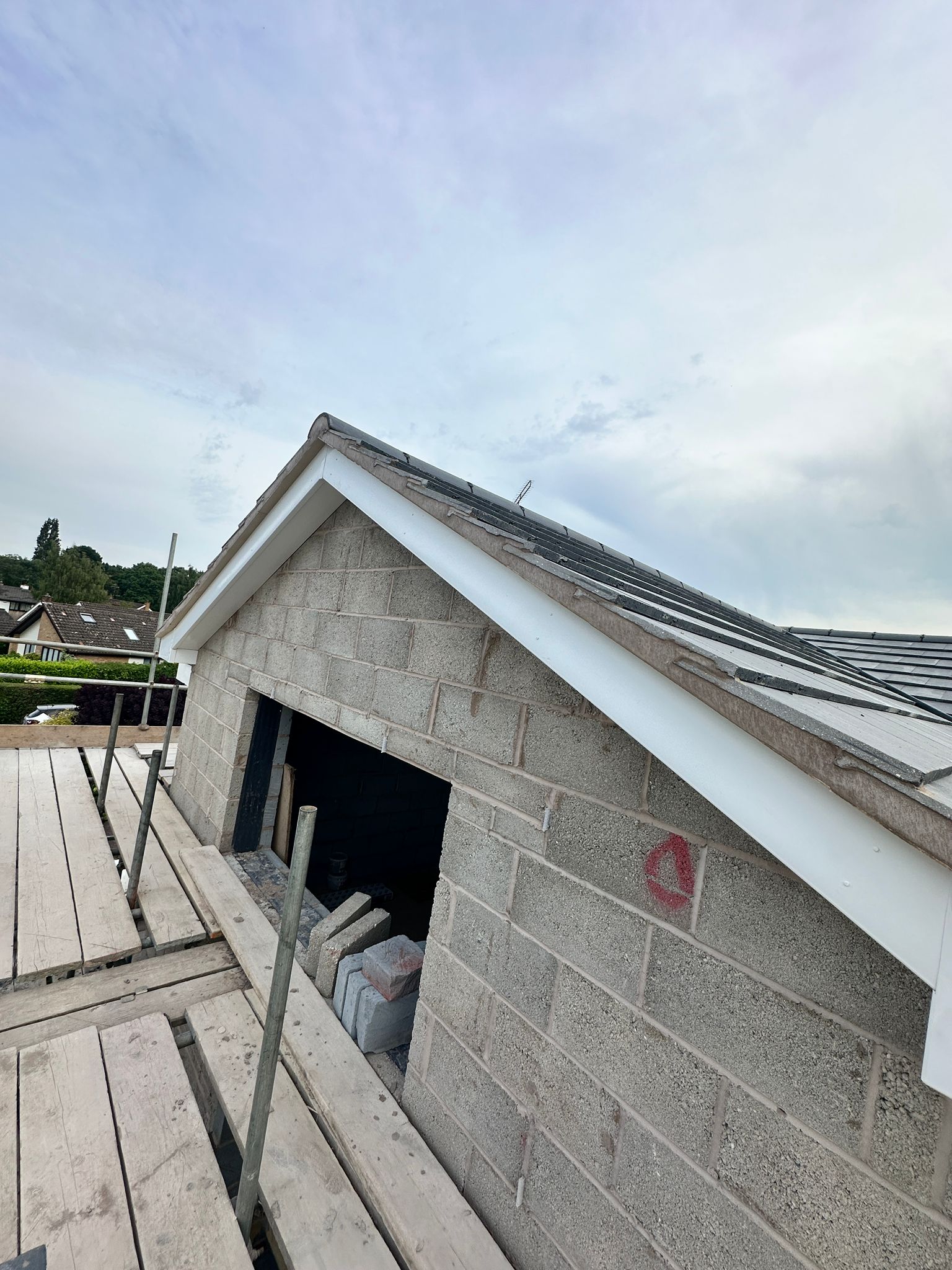
Reroofing the Property With Sandtoft Tiles
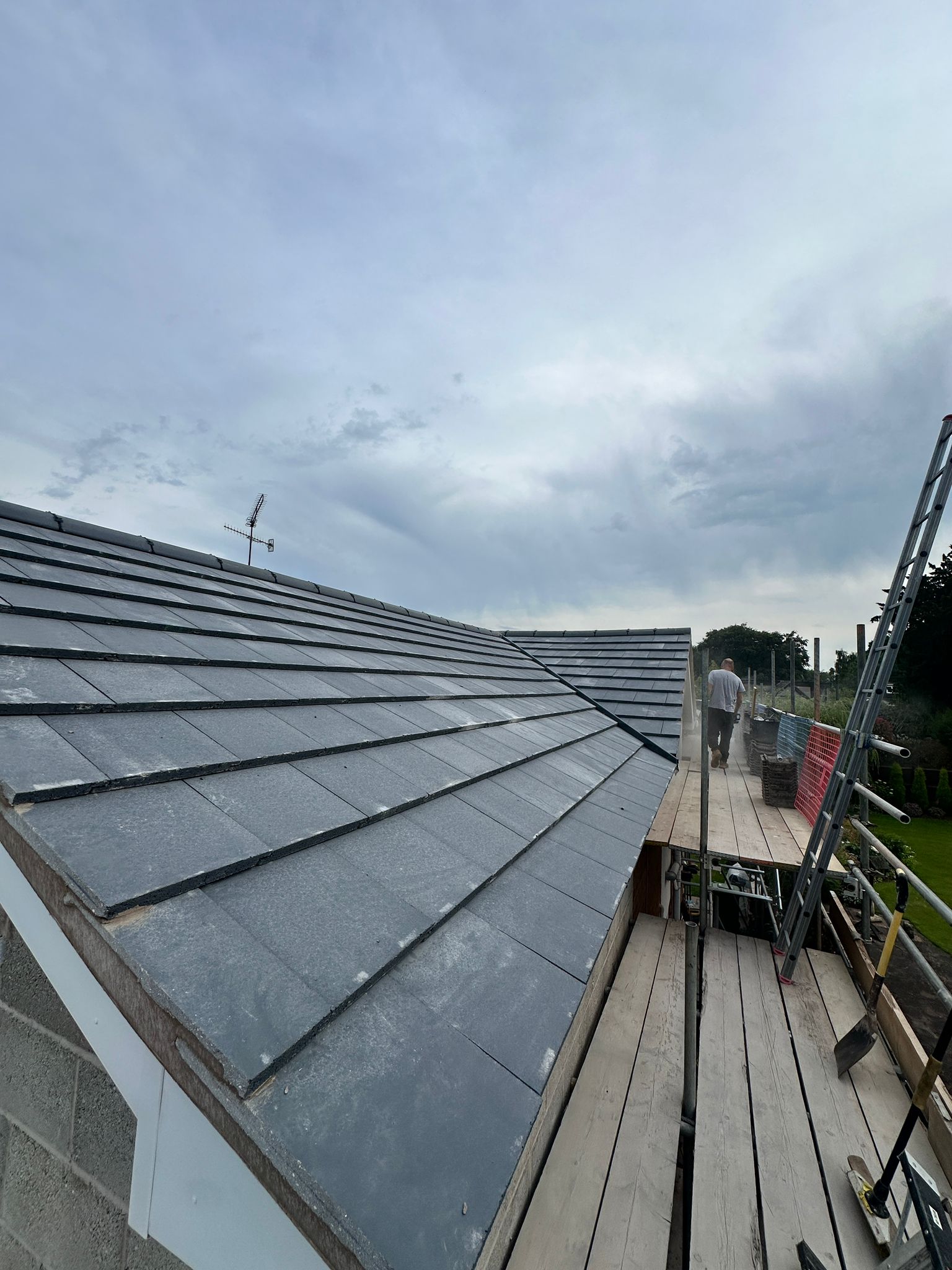
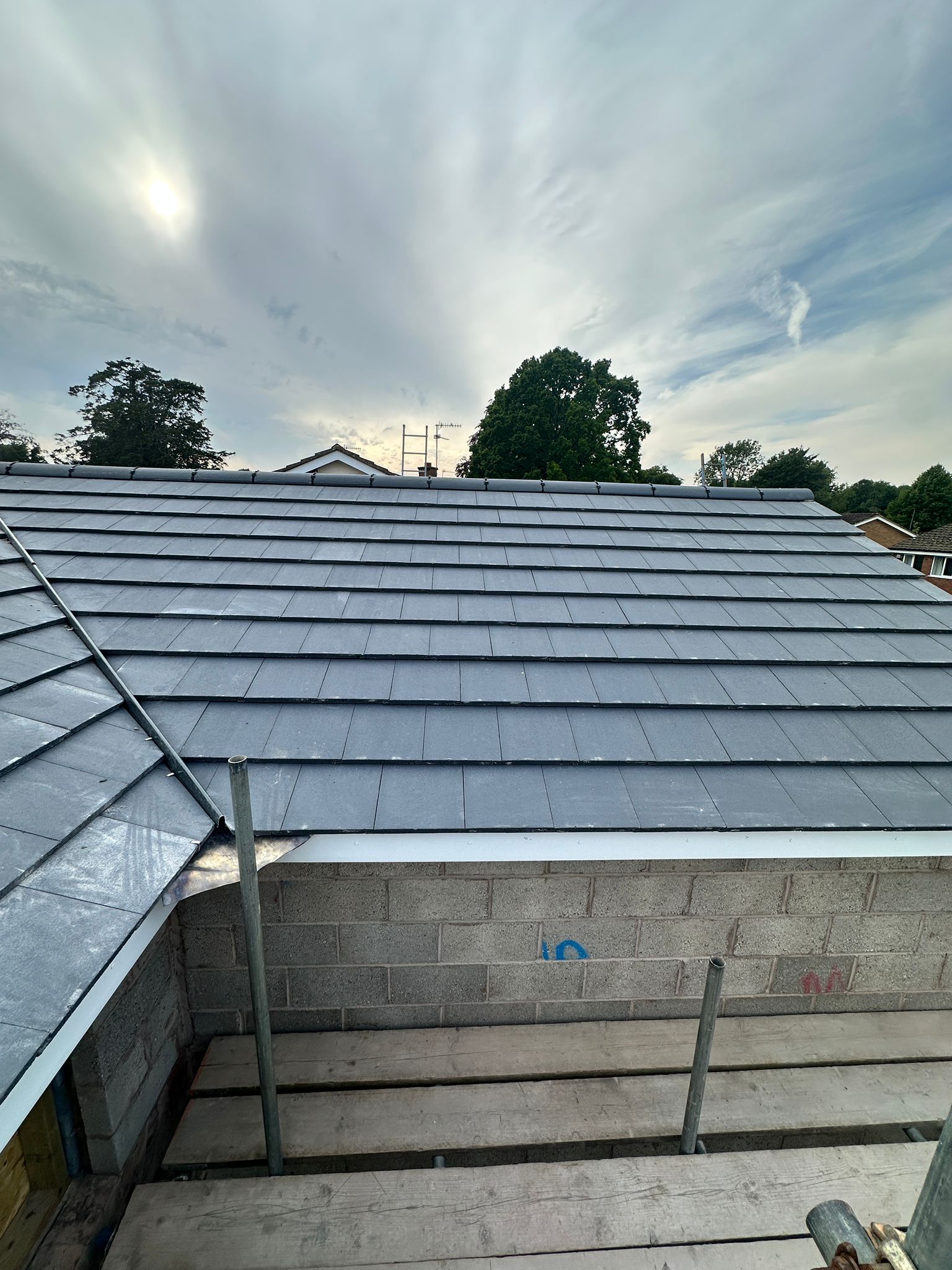
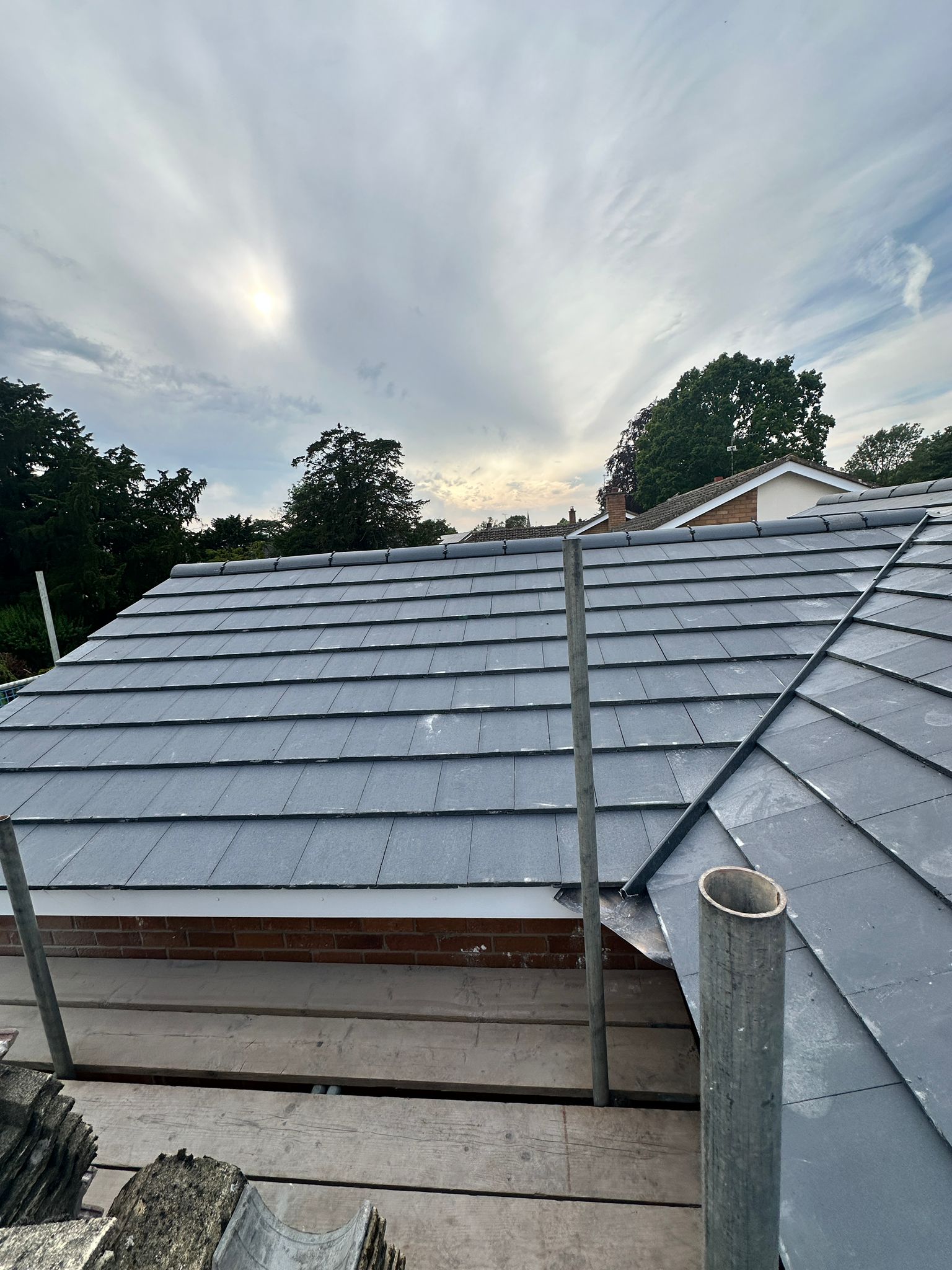
The new roof covering was completed using Sandtoft roof tiles. Using the same roofing material across the extension and the existing sections helped create a uniform appearance rather than leaving the property with an obvious divide between the newer and older roof areas.
A full reroof involves considerably more than simply swapping old tiles for new ones. Once the existing roof covering is removed, it creates an opportunity to review and improve important components around the roof, including the ridge, valleys, ventilation and verge details.
For this property in Leamington Spa, that meant the roof could be modernised as an overall system rather than simply replacing the visible covering.
Installing a Dry Valley System
One of the important details on the new roof was the installation of a dry valley system. A roof valley is created where two pitched roof sections meet internally. These areas handle a large amount of rainwater because water from both adjoining roof slopes is directed towards the same channel. As a result, valleys need to be correctly installed and weatherproofed.
A dry valley system provides a mechanically installed solution that does not rely on traditional mortar bedding. This creates a neat junction between the roof slopes while reducing the amount of exposed mortar that may otherwise require maintenance as it ages.
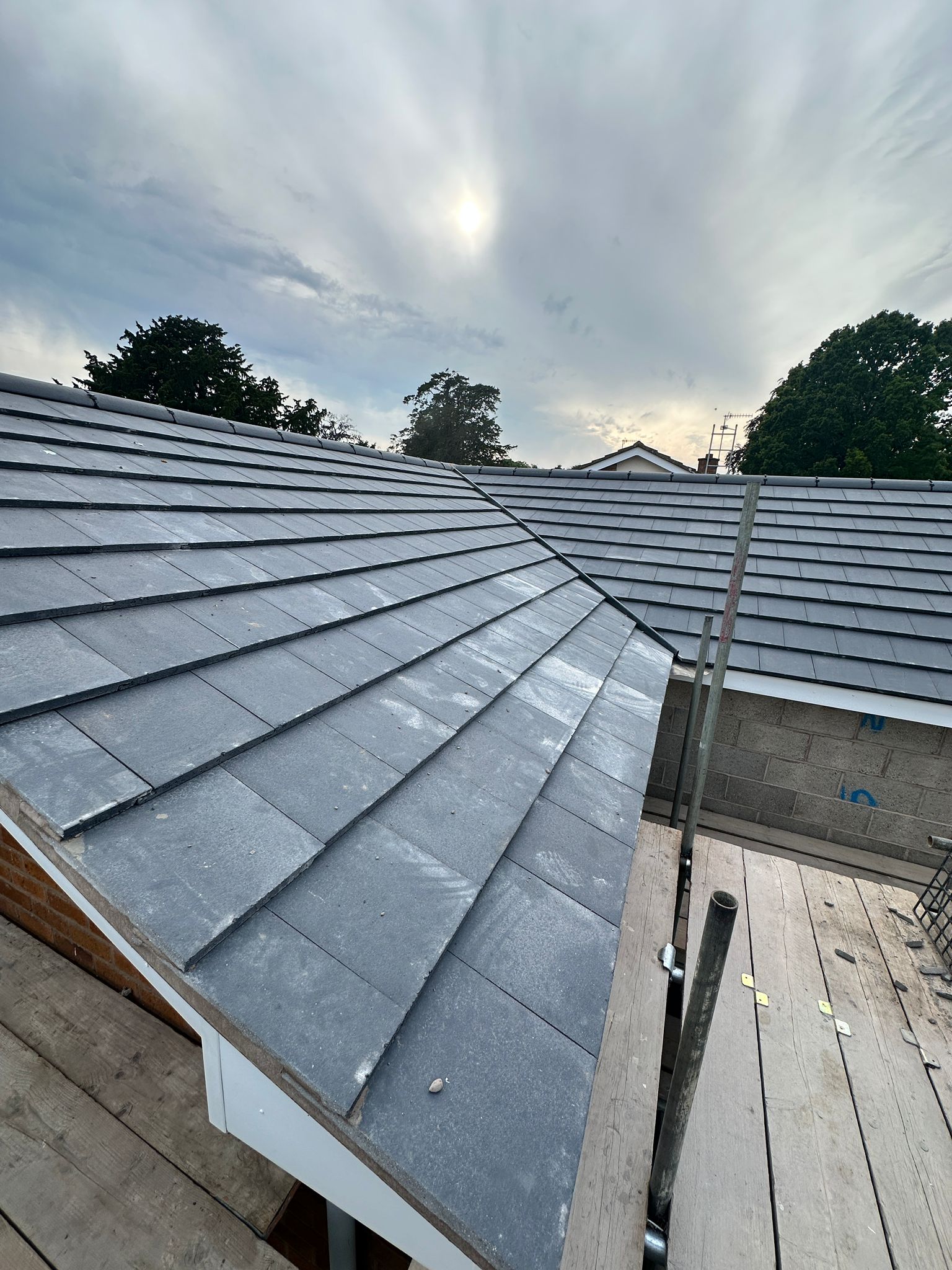
The finished photographs from Fernhill Drive show the valley creating a clean transition between the different sections of the newly tiled roof.
Installing a Dry Ridge System
The ridge runs along the highest point of a pitched roof and is continually exposed to wind, rain and changing temperatures. For this reroof in Leamington Spa, a dry ridge system was installed.
Rather than relying solely on mortar to hold the ridge tiles in position, a dry ridge system mechanically secures them to the roof. This helps create a strong, durable ridge and reduces the maintenance problems associated with ageing or cracked ridge mortar.
The dry ridge system also played an important part in ventilating the new roof.
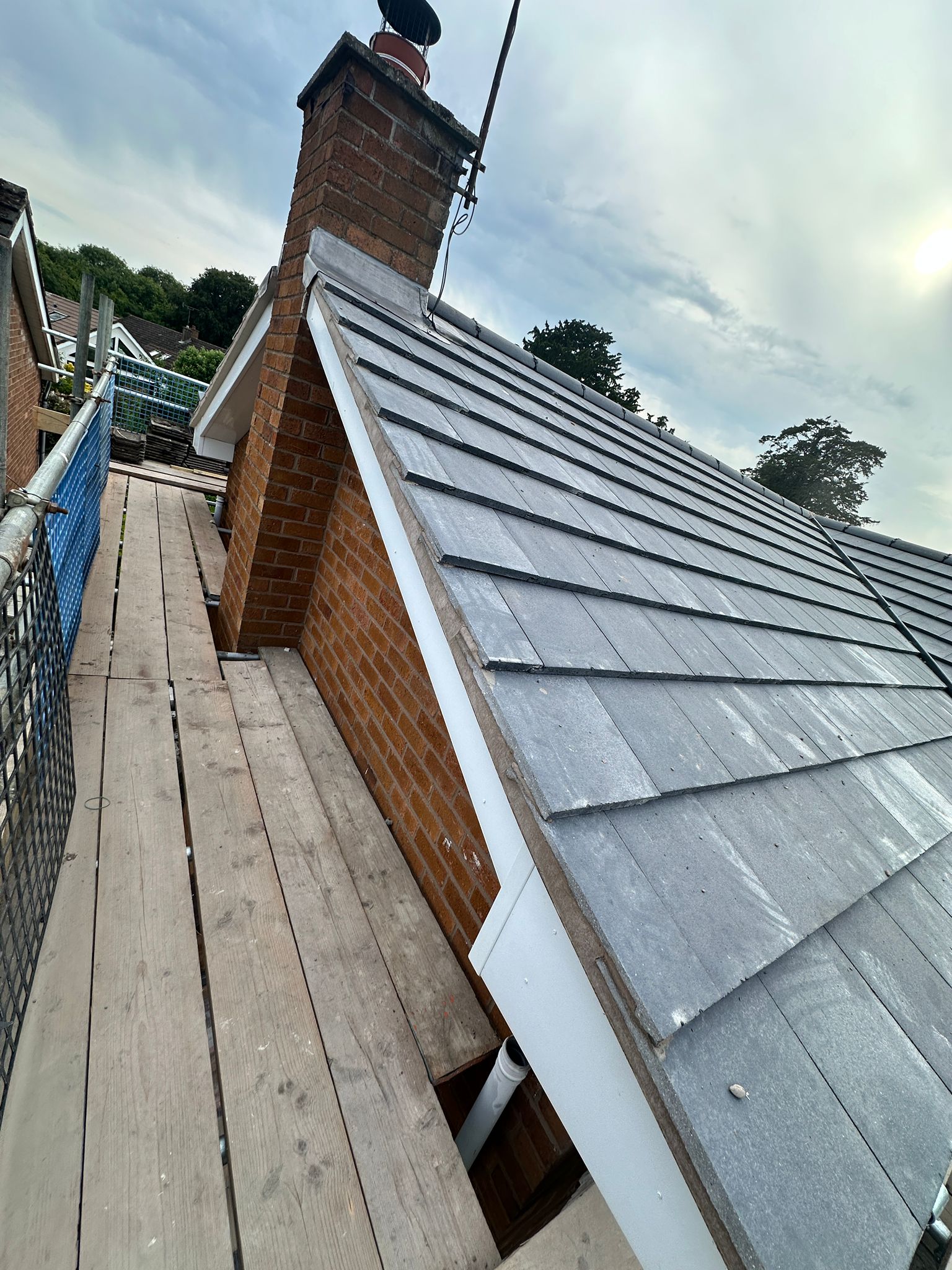
Improving Roof Ventilation
Good ventilation is an important part of a modern pitched roof. Moisture from inside a home can rise into the roof space. If that moisture cannot escape, it can condense against colder surfaces inside the roof.
Over time, excessive condensation can contribute to problems including damp roof timbers, mould growth and deterioration within the roof structure.
At Fernhill Drive, over-fascia ventilation was installed as part of the reroofing work. These vents allow fresh air to enter the roof space discreetly around eaves level. Combined with the ventilated dry ridge system at the top of the roof, this helps encourage airflow through the roof space.
It means ventilation becomes part of the construction of the roof rather than something added as an afterthought.
Traditional Cement Verges
Although the project incorporated several modern dry-fix roofing systems, cement verges were retained to achieve a more traditional appearance. The verge is the exposed edge of the roof where the tiles meet the gable end of the property.
For some homes, a traditional mortar-finished verge suits the appearance of the building better than a plastic dry-verge system. This project therefore combines different roofing methods according to where they work best.
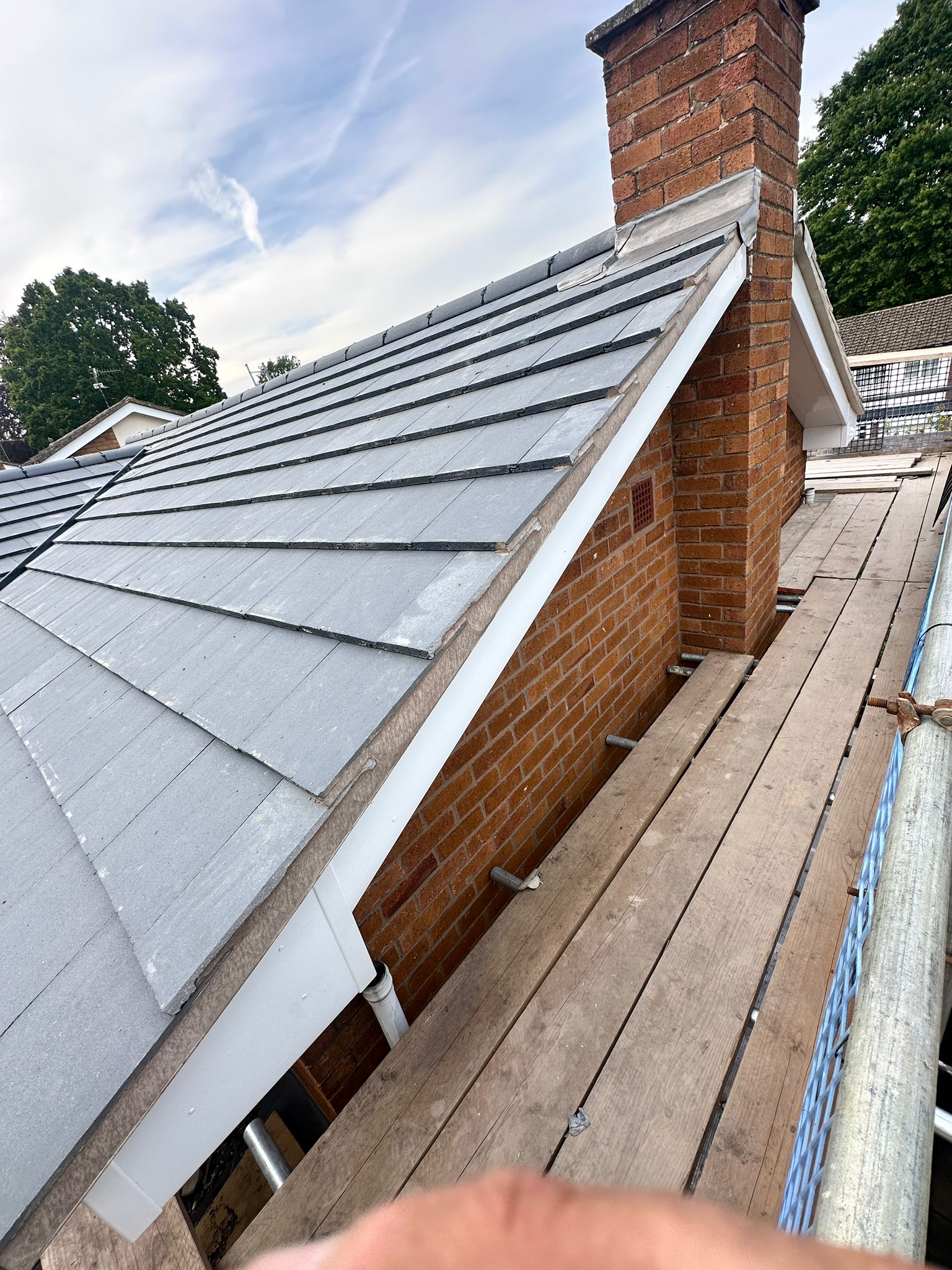
The roof benefits from modern dry ridge and dry valley technology while maintaining the more traditional visual character of cement verges.
Bringing the Extension and Existing Roof Together
One of the biggest challenges when roofing an extension is making sure the new section feels like part of the original home. The finished roof at Fernhill Drive now has a consistent tiled appearance across both the new extension and the reroofed sections of the existing property.
Careful detailing around the valleys, ridges, verges and roof junctions helps the different pitches work together as one complete roofing system.
The result is not simply a new roof on an extension. The wider reroof has given the property a more comprehensive roofing upgrade, addressing several elements that contribute to the long-term performance of the roof.
Should You Reroof Your House When Building an Extension?
It is a question many homeowners consider when extending a property. If the existing roof is already approaching the stage where significant repairs or replacement are likely to be needed, carrying out the reroof alongside an extension can make practical sense.
Completing both projects together can make it easier to:
- create a consistent roof covering across the property
- correctly integrate the new and existing roof sections
- renew roof valleys and ridge details
- improve ventilation
- avoid an obvious mismatch between old and new tiles
- reduce the likelihood of needing another major roofing project shortly after the extension is completed
That does not mean an existing roof automatically needs replacing whenever an extension is built. The correct approach depends on the age, condition and expected remaining lifespan of the existing roof.
Reroofing and Extension Roofing in Leamington Spa
Roof Maintenance Leamington carries out reroofing, new extension roofing, tiled roof installation, roof valley installation, dry ridge systems and roof ventilation upgrades in Leamington Spa and the surrounding Warwickshire area.
Projects involving extensions require particular care because new roofing needs to integrate correctly with the existing property. Getting the junctions, valleys, ventilation and finishing details right is what turns several individual roof slopes into one dependable roofing system.
Need similar results for your property?
Our experienced team is ready to assess your roofing or chimney issue and provide a detailed, honest quote.